

Krafft-Ebing, R. von (1888) Eine experimentelle Studie auf dem Gebiete des Hypnotismus
Rating: ♥♥ (Good)
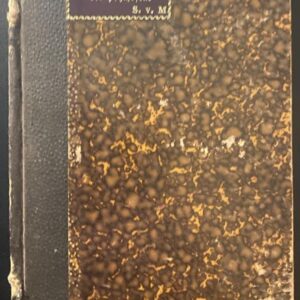
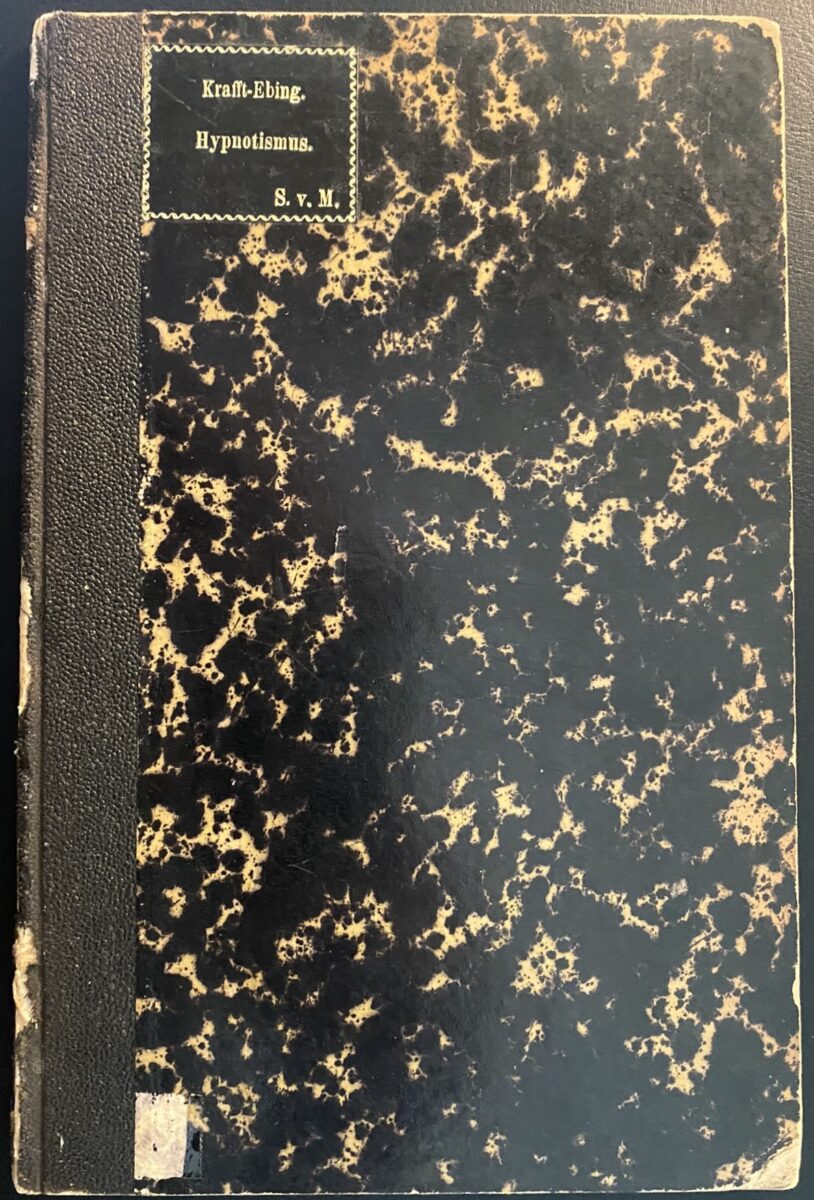
The book is shelve worn, spine has glued at some point. Marks from tape can be found on the cover. Pages are darkened, binding is lose but the book still holds its pages. Pages and leaves present, no tears in paper or cover. Exlib.

Richard von Krafft-Ebing, an Austrian psychiatrist, wrote *Eine experimentelle Studie auf dem Gebiete des Hypnotismus* in 1888. In this work, he examined hypnosis through experiments. Krafft-Ebing aimed to explain hypnosis as a scientific process.
Hypnosis gained attention in the 19th century. Krafft-Ebing, already known for his work on mental health and sexuality, saw potential in studying hypnosis. He wanted to show it could be a serious scientific topic, not just a mystical idea.
- Krafft-Ebing conducted experiments to observe hypnosis. He documented how people entered trances and how they responded to suggestions.
- Krafft-Ebing believed hypnosis could help treat mental disorders. He also explored its use for pain relief and in treating hysteria.
- He studied how hypnosis affected both the mind and body. Krafft-Ebing saw this as a way to better understand how thoughts can influence physical states.
- His experiments showed how people under hypnosis could follow commands. Krafft-Ebing viewed this as insight into the subconscious mind.
Krafft-Ebing’s work helped establish hypnosis as a valid scientific field. His research laid the groundwork for future studies in hypnosis and its medical applications.